Rotating cubic frames, said to be based on the size of football goal posts. By Elliott Brook (1971-2013). Installed 2012 at Shepherd’s Bush Green, London Borough of Hammersmith & Fulham.
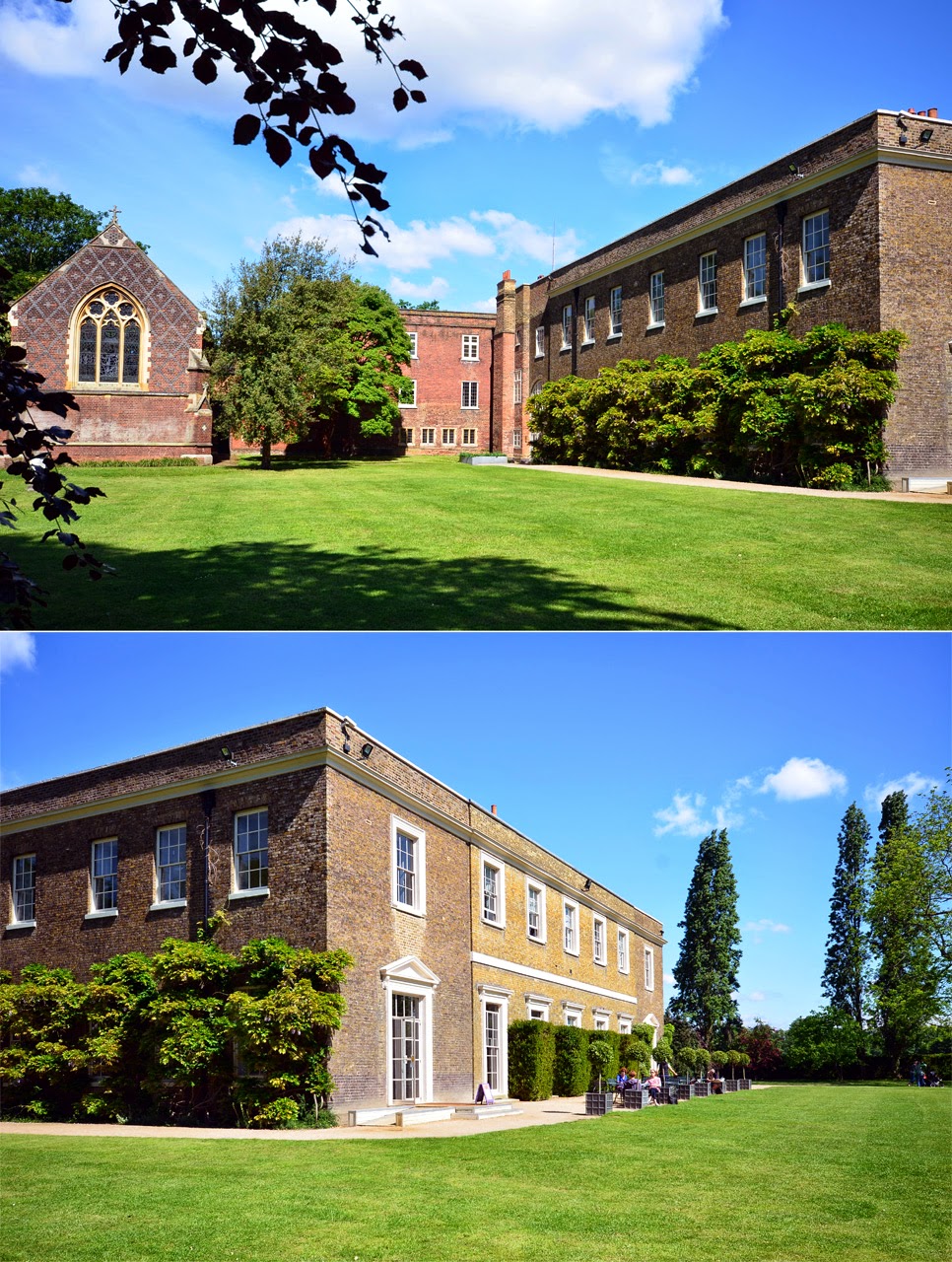
The Georgian style section was built in the 1760s, and partly refronted 1814-18 (source: English Heritage). The 3-storey brick extension to the chapel was by W.Butterfield, 1866. London Borough of Hammersmith & Fulham.
The fourth chapel at Fulham Palace, designed by William Butterfield, built 1867. View of the east elevation with revived Decorated Gothic style window and dark blue diapering on red brickwork. Grade II listed. London Borough of Hammersmith & Fulham.
Early C16th Tudor-arched entrance to the West Courtyard. This shape of arch was typical of the period in England. Fulham Palace is Grade I listed. London Borough of Hammersmith & Fulham.
Late Tudor with later alterations and restorations. Fulham Palace was the country residence of the Bishops of London for centuries but was vacated by the church in 1975. Grade I listed. London Borough of Hammersmith & Fulham.
Circa 1815, architect unknown, restored 2012. Tudor Gothic style with 4-shafted Tudor-style chimney. On entrance drive to Fulham Palace. Grade II listed. London Borough of Hammersmith & Fulham.
Circa 1903 with terracotta arms and insignia of Fulham council. This part of the park was originally designed by the then Borough Surveyor, Mr Francis Woods [source: English Heritage]. London Borough of Hammersmith & Fulham.
Memorial to volunteers from Hammersmith & Fulham who joined the International Brigade. Erected by the Borough and local trades council, 31 August 1997. Bishop's Park, London Borough of Hammersmith & Fulham.
Design Architects: Foster. Engineers: Arup. Looking like it has moored in the North Dock is the new Canary Wharf Crossrail station. Crossrail is the largest infrastructure project in Europe and this station alone costs a reported GBP500M. London Borough of Tower Hamlets.
Design Architects: Foster. Engineers: Arup. A timber lattice is part-covered with plastic (ETFE) "cushions". Where exposed, the beams are sheathed in aluminium. . London Borough of Tower Hamlets.
(Work-in-progress). Design Architects: Foster. Engineers: Arup. West elevation of the new Crossrail station looking like a ship's prow in the North Dock. Four levels are below the waterline and, as well as the inevitable shopping malls, there will be a substantial roof garden. London Borough of Tower Hamlets.
(Work-in-progress). Design Architects: Foster. Engineers: Arup. Showing the covered walkway to the new station from North Colonnade. The station is on six levels and the Crossrail trains will stop at Level -6. London Borough of Tower Hamlets.
Architects: Kohn Pedersen Fox for Canary Wharf Group. The last building to be built as part of the original masterplan for Canary Wharf, London Borough of Tower Hamlets.
Part of the Hayward seen from the roof of the Queen Elizabeth Hall. Designed by the GLC Department of Architecture, opened 1968. London Borough of Lambeth.
Concrete textures of the Hayward Art Gallery opened on London's South Bank in 1968. Designed by the GLC Department of Architecture. London Borough of Lambeth.
Architect: Charles Holden, designed mid-1930s but not built until after WW2 in 1947. My guess is that the exterior was intended to be brick finished, but that the brick shortage after the war prevented this. London Borough of Redbridge.
Architect: Charles Holden, designed mid-1930s but not built until after WW2 in 1947. During the war the tunnels, which had been mostly completed, were utilized by the Plessey Co. for the manufacture of electrical and electronic parts for aircraft. Grade II listed in 2011. London Borough of Redbridge.
Architect: J Seymour Harris, completed 1960, reclad in 1980 with limestone and brown metal window frames/spandrel panels. I understand it's now planned to demolish and replace with a hotel. City of London.
Entrance to 8 & 9 Giltspur Street, built 1907 in an Edwardian Baroque style using red brick and sandstone. Now converted to apartments. City of London.
"Originally known as Knightrider Street and in part as Rennerstrete, is thought to record the passage of knights to nearby tournaments at Smithfield; and gilt spurs may indeed have been made here." EC1, City of London.